
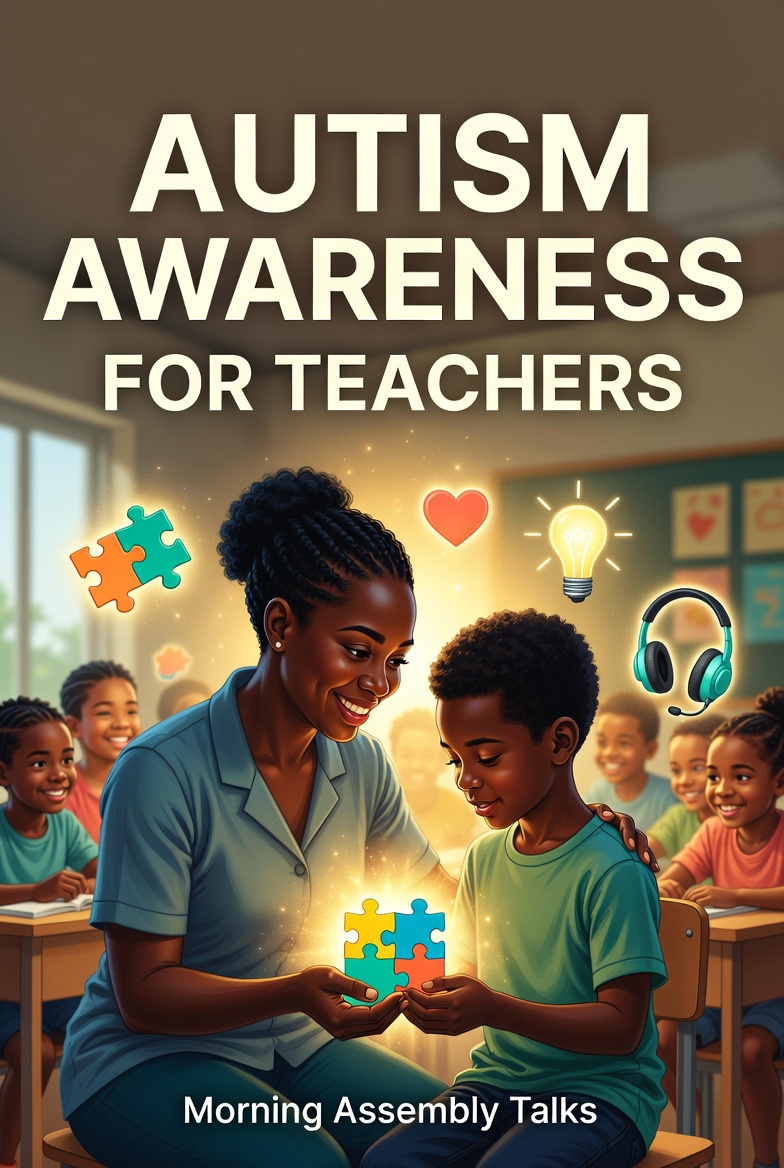
Autism, also known as Autism Spectrum Disorder (ASD), is a neurodevelopmental condition that affects how a person communicates, interacts, and behaves. It is called a “spectrum” because symptoms vary significantly from one individual to another—no two people with autism are exactly the same.
Recognizing these symptoms early empowers teachers, parents, and students to provide the necessary support and foster an inclusive environment.
1. Communication Difficulties
Communication is one of the primary areas where autism manifests. This can range from non-verbal communication to challenges with social nuances.
- Delayed speech or a total absence of expressive language.
- Difficulty expressing complex thoughts or feelings.
- Echolalia: Repeating specific words or phrases out of context.
- Limited eye contact during conversations.
Example: A student may fully understand a teacher’s question but struggle to formulate a verbal response.
2. Social Interaction Challenges
Navigating social “rules” can be overwhelming for individuals on the spectrum.
- Difficulty making or maintaining friendships.
- A strong preference for solitary play or working alone.
- Misunderstanding social cues, such as facial expressions or tone of voice.
- Appearing uninterested in casual “small talk.”
Example: A student might not respond when their name is called. This often isn’t rudeness; it’s a result of how their brain processes social stimuli.
3. Repetitive Behaviors
Predictability provides a sense of security for many people with autism.
- Self-stimulatory behaviors: Repeating physical actions like hand-flapping, rocking, or spinning.
- Rigid routines: A deep need for things to happen in a specific order.
- Distress over change: Even small deviations from a schedule can cause significant anxiety.
Example: A student may insist on sitting in the exact same seat every day and feel genuine distress if that seat is unavailable.
4. Sensory Sensitivity
The world can be “too loud” or “too bright” for someone with sensory processing differences.
- Overreaction or underreaction to sounds, lights, textures, or touch.
- Covering ears or closing eyes in busy environments.
- Discomfort with specific clothing textures (like tags or wool) or physical contact.
Example: A standard noisy classroom or a buzzing fluorescent light may feel physically painful or overwhelming to a student with autism.
5. Intense Interests or Focus
Many individuals with autism possess “spiky profiles,” where they excel tremendously in specific areas.
- Hyper-fixation: A deep, encyclopedic interest in specific topics (e.g., trains, astronomy, or coding).
- High levels of focus: The ability to work on a single activity for extended periods.
Example: A student may display an extraordinary talent for drawing or an incredible ability to memorize complex sets of data.
Important Considerations
It is vital to remember that autism is not a “one size fits all” diagnosis.
- Not all students will show every symptom listed above.
- The level of support needed varies from person to person.
- Symptoms can change as a child grows and develops coping strategies.
“I am different, not less.” — Temple Grandin
Final Thought
Understanding the symptoms of autism is not about labeling—it is about supporting and including. When we recognize these signs, we can respond with patience, kindness, and the right tools. Every student deserves to be understood and given the opportunity to succeed.