
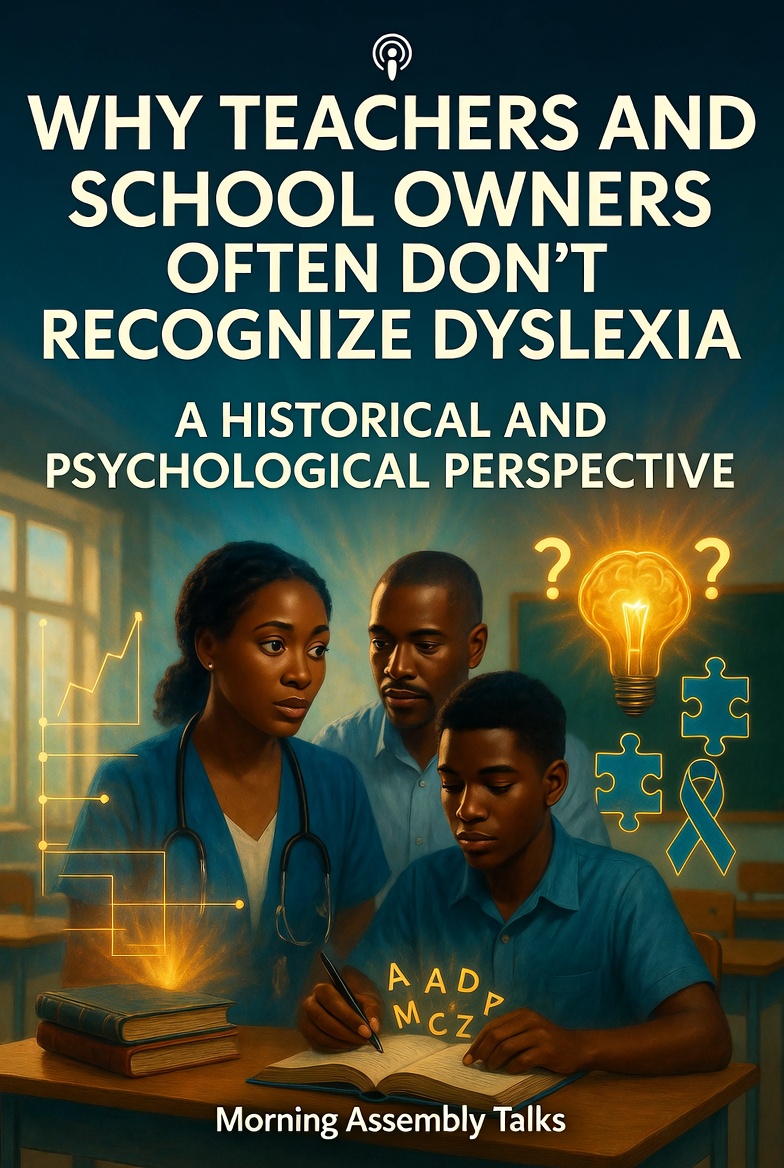
Despite decades of research, dyslexia remains widely misunderstood in schools. Many educators and administrators mistake its symptoms for laziness, inattentiveness, or a lack of effort. This oversight leads to students being unfairly labeled as “slow learners,” while their true potential remains locked behind a learning difference.
The Evolution of Misunderstanding: A Brief History
To understand why we struggle to recognize dyslexia today, we must look at how our understanding of the condition has evolved—and where it got stuck.
19th Century: “Word Blindness”
The term “dyslexia” was first introduced in the late 19th century by German physician Oswald Berkhan. Later, Adolf Kussmaul observed children who struggled to read despite having normal intelligence.
- The Flaw: Early research viewed dyslexia purely as a medical “word blindness.” This medicalized view was rarely shared with teachers, leaving it inaccessible to the average classroom.
20th Century: Brain-Based Processing
Psychologists like Samuel Orton began linking dyslexia to neurological differences in language processing.
- The Gap: While Orton’s work was revolutionary, it remained confined to specialists. Regular educators were rarely trained to spot subtle signs like letter reversals or sequencing challenges.
The Psychological Trap
Myth: The student isn’t trying hard enough. Reality: The student is working twice as hard as their peers to process the same information, leading to cognitive fatigue and “perceived” inattentiveness.
The Modern Challenge in Schools
Even today, especially in regions like Nigeria, teacher training programs often provide minimal coverage of learning differences.
- Prioritizing Performance: School owners often focus on standardized academic results. This “one-size-fits-all” approach unintentionally overlooks students who process information differently.
- The Silent Struggle: Without early screening, students with dyslexia often become “disruptive” as a defense mechanism to hide their reading struggles, further masking the real issue.
A Call to Action for Educators
Understanding dyslexia is not just about identifying reading difficulties—it is about recognizing a student’s unique learning profile. To bridge this historical gap, schools must:
- Invest in Training: Move beyond general education and learn specific dyslexia intervention.
- Early Screening: Implement assessments early in a child’s academic journey.
- Individualized Support: Create environments that celebrate creative potential alongside academic growth.
Don’t let this hidden struggle go unnoticed. Your awareness can be the catalyst that unlocks a child’s future.