
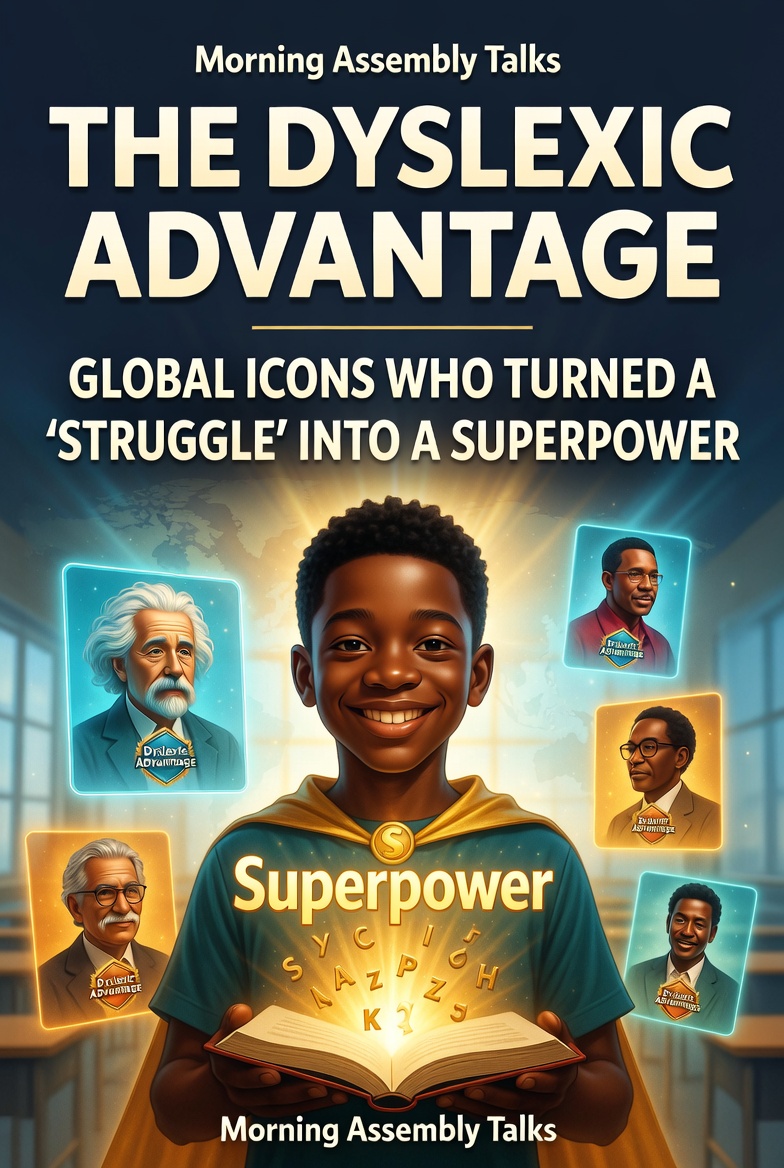
For decades, the traditional classroom has measured brilliance by how fast a child can read a sentence or how accurately they can spell a word. But history tells a different story.
Some of the most influential minds in law, medicine, media, and technology didn’t just overcome dyslexia—they used the unique “big-picture” wiring of their brains to revolutionize their industries.
“Dyslexia is not a sign of low intelligence. It’s an indicator of a mind that is built for more than just the basics.”
🎬 In Media & Entertainment: Steven Spielberg
Before he was the most famous director in the world, Spielberg dreaded being called on to read in class. He wasn’t diagnosed until his 60s, having spent his youth labeled as “lazy” by teachers.
- The Superpower: Spielberg realized that while he couldn’t process text quickly, he could process visual stories with a depth others couldn’t see.
- The Quote: “Dyslexia was the last puzzle piece in a great mystery that I’ve kept to myself.”
⚖️ In Law & Advocacy: David Boies
A career in law—a field defined by massive stacks of documents—might seem impossible for someone with dyslexia. Enter David Boies, one of the most powerful trial lawyers in America (famous for Bush v. Gore).
- The Superpower: Because he couldn’t rely on skimming notes, he mastered a “super-memory” and the art of listening. His dyslexia forced him to be more prepared and observant than any opponent.
🚀 In Medicine & Science: Dr. Maggie Aderin-Pocock
A world-renowned space scientist, Maggie was placed in remedial classes as a child. She attended 13 different schools and was often told her dreams were unrealistic.
- The Superpower: She used visual thinking to master the complexities of the universe, eventually building instruments for the James Webb Space Telescope.
- The Quote: “I am a dyslexic. I struggled at school. But I had a dream, and that dream was to get to space.”
📖 In Psychology & Literature: F. Scott Fitzgerald
The author of The Great Gatsby struggled with spelling his entire life and was even kicked out of school for failing grades.
- The Superpower: His ability to synthesize social patterns and human emotion led to some of the greatest literature in history. He saw the “narrative” of life where others only saw the details.
Why the Dyslexic Brain Thrives
Science shows that the dyslexic brain is often more interconnected in areas responsible for innovation, empathy, and spatial reasoning.
| Profession | How Dyslexia Becomes an Asset |
|---|---|
| Lawyers | Become master orators by focusing on the heart of the argument. |
| Doctors | High diagnostic accuracy by seeing symptoms as a “system.” |
| Entrepreneurs | (Like Richard Branson) Natural delegators and creative risk-takers. |
Export to Sheets
The Path Forward with Skills and Career Paths
At skillsandcareerpaths.com, we don’t want you to just “get by.” We want you to lead.
“The greatest burden of dyslexia isn’t the difficulty with reading; it’s the weight of being misunderstood by those who are supposed to guide you.”
Through our Support Therapy Program, we provide the tools—from multisensory literacy to AI-driven assistive technology—to help you stop fighting your brain and start using it.
🌟 Ready to Unlock Your Superpower?
[Visit Skillsandcareerpaths.com Today] Don’t let a label define your limit. Join the ranks of those who saw the world differently—and changed it.