
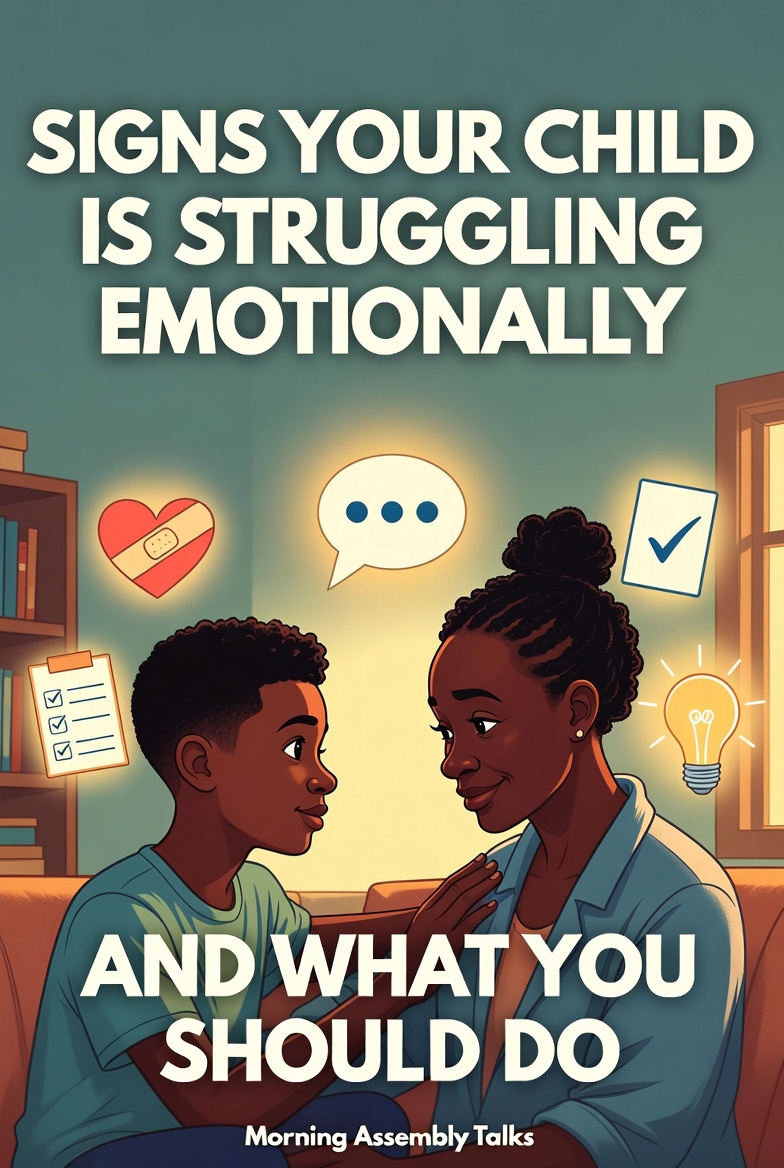
Not all struggles are visible. A child can be neatly dressed, attending school, and even smiling—yet still be hurting deeply inside.
Emotional struggles in children rarely come with loud announcements. They show up in small changes: a quiet withdrawal, sudden flashes of anger, or unusual shifts in behavior. Many parents miss these signs, not because they don’t care, but because they haven’t been taught what to look for.
“Children don’t always say ‘I’m hurting.’ Sometimes, they show it in ways we don’t understand.”
Understanding these signs early can make the difference between a child who suffers in silence and a child who feels seen, heard, and supported.
Zara’s Story: The Quiet Change
A mother once noticed her daughter, Zara, had changed. Zara used to be lively—sharing stories and laughing after school. But gradually, she became quiet. She stayed in her room longer and lost interest in her favorite hobbies. Her grades began to slip.
At first, her mother thought, “It’s just a phase.” Until one evening, Zara said softly: “Mummy, I feel like I’m not good enough anymore.” That moment changed everything. What looked like “normal teenage behavior” was actually deep emotional distress.
“Sometimes, the biggest cries for help are the quietest ones.”
7 Warning Signs Your Child is Struggling
Every child is different, but these are the key red flags that suggest something deeper is happening:
- Sudden Change in Behavior: Becoming unusually withdrawn, irritable, or losing interest in activities they once loved.
- Academic Decline: A drop in grades or a lack of concentration. This is often not “laziness,” but a sign of being emotionally overwhelmed.
- Withdrawal: Spending excessive time alone and avoiding family conversations or social interactions.
- Negative Self-Talk: Saying things like “I’m stupid” or “I’m not good enough.”
- Physical Changes: Significant shifts in sleep patterns (too much or too little) or changes in appetite.
- Increased Sensitivity: Overreacting to small issues or crying more frequently than usual.
- Acting Out: Sudden disobedience or aggression. Sometimes, children “misbehave” because they don’t have the words to express their pain.
“What looks like misbehavior may actually be a cry for help.”
Understanding the Triggers
Understanding the why helps you respond with grace. Common triggers for emotional distress include:
- Heavy academic pressure or fear of failure.
- Comparison with high-achieving peers or siblings.
- Bullying or social challenges at school.
- High family expectations or conflict at home.
- Social media influence and self-image issues.
How to Be the Support Your Child Needs
1. Create a Safe Space
Let your child know they can talk to you without fear of punishment. Use open-ended questions like, “How are you really feeling today?”
“A child who feels safe will speak; a child who feels judged will hide.”
2. Listen Deeply, Not Quickly
Sometimes, children don’t need a lecture or a solution—they just need to be heard. Maintain eye contact, be patient, and validate their feelings by saying: “I understand why that would make you feel that way.”
3. Reduce Pressure, Increase Support
Focus on their effort rather than just their results. Encourage progress over perfection.
4. Collaborate with Professionals
Don’t be afraid to reach out to teachers and school counselors. They see your child in a different environment and can offer valuable insights. If signs persist, seeking the help of a psychologist or counselor is a sign of wisdom, not weakness.
What NOT to Do: Common Mistakes
- Ignoring the signs: Assuming “they’ll be fine” or “it’s just a phase.”
- Blaming: Shouting at them for their behavior or grades.
- Minimizing: Dismissing their feelings as “unimportant” or “small.”
“Minimizing a child’s feelings doesn’t make them disappear—it makes them deeper.”
Conclusion: Your Presence is Your Power
Dear parent, your child does not need a perfect parent. They need a present one. They need someone who notices, listens, and supports. Sometimes, all it takes to change a child’s emotional world is the simple act of being truly seen.
“Behind every emotionally strong child is a parent who chooses to listen.”
For more resources on nurturing your child’s growth and mental health, visit SkillsandCareerPaths.com.