Category: student

  • Noticeable Symptoms of Dyslexia in Students

    Noticeable Symptoms of Dyslexia in Students

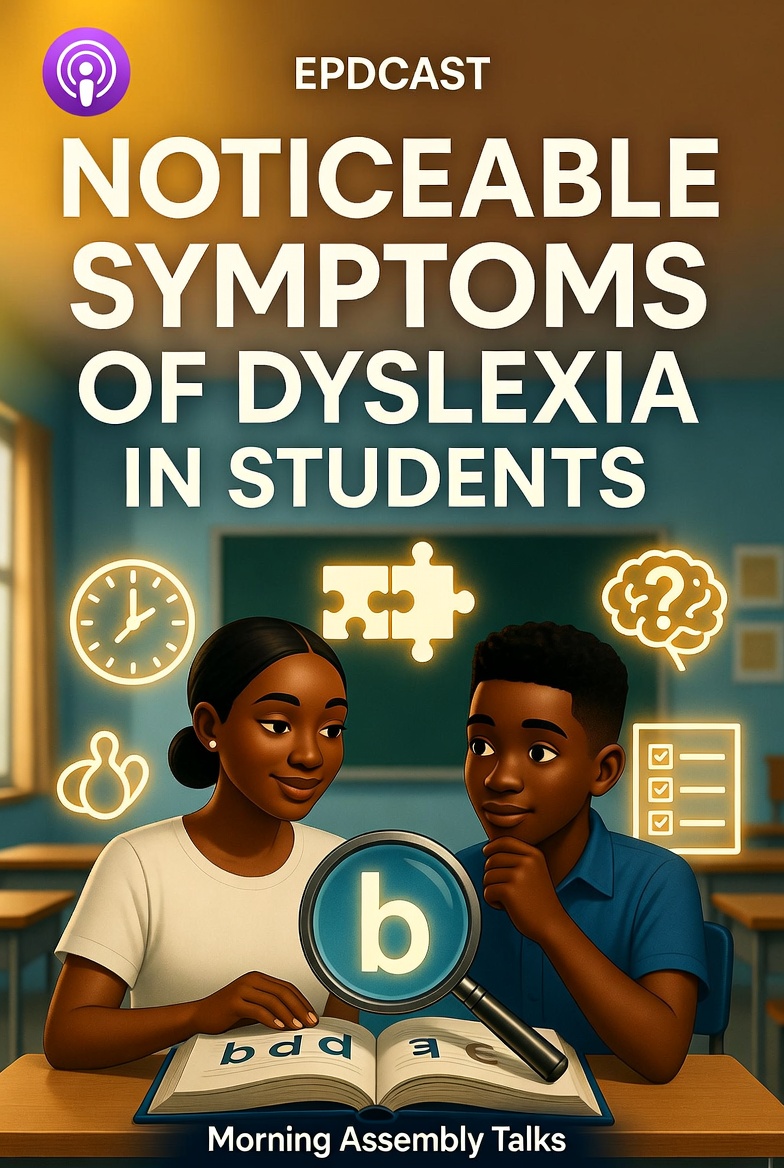
    Dyslexia is a learning difference that affects how students process written language. It makes reading, writing, and spelling more challenging—even for bright and capable learners. Because it is a “hidden” difference, recognizing the signs early is the first step toward unlocking a student’s potential.

    📋 Common Signs to Watch For

    If you notice a student consistently struggling with the following tasks, it may be time to consider a specialized assessment:

    • Letter and Word Reversals: Confusing letters (e.g., b vs. d, p vs. q) or “mirror reading” words (e.g., was instead of saw).
    • Inconsistent Spelling: Spelling the same familiar word differently within the same paragraph, even after repeated practice.
    • Sight Word Struggles: Difficulty recognizing high-frequency words instantly, which slows down reading speed and comprehension.
    • Color Confusion: Unexpectedly mixing up color names (e.g., calling green “blue” or red “brown”).
    • Avoidance Tactics: Reading slowly, losing their place often, or avoiding reading aloud due to frustration or embarrassment.
    • Sequencing Difficulties: Trouble remembering ordered information, such as strings of numbers, multi-step instructions, or the steps in a specific task.
    • The “Disengagement” Mask: Appearing bored or disengaged in class despite showing high curiosity and intelligence in verbal discussions.

    Why Early Recognition Matters

    These signs are not a reflection of a student’s intelligence, ability, or effort. In fact, many students with dyslexia are highly creative and excel in problem-solving.

    Recognizing these symptoms early allows students to:

    1. Access Targeted Support: Implementing strategies like multisensory learning.
    2. Build Confidence: Removing the “stigma” of being a “slow learner.”
    3. Unlock Potential: Allowing their academic and creative strengths to shine through.

    Take Action: If you are a teacher or school owner at Skills and Career Paths, use this checklist during your next classroom observation. Early intervention is the bridge to a student’s success
  • The Secret No One Talks About: Why Your Future is Hidden in Your Daily Habits

    The Secret No One Talks About: Why Your Future is Hidden in Your Daily Habits

    Everyone talks about success—top grades, prestigious scholarships, great careers, and public recognition. But very few people talk about how that success is actually built.

    Success is not one big moment. It is not luck, and it is not magic. It is habits—small, repeated actions done every single day.

    “We are what we repeatedly do. Excellence, then, is not an act, but a habit.” — Aristotle

    Imagine two students in the same classroom. They have the same teacher and write the same notes. Yet, months later, one excels while the other struggles. What made the difference? Daily habits.

    The Story of Amina: The Power of Small Changes

    Amina was an average student. She wasn’t the worst, but she wasn’t the best. Her biggest problem was inconsistency. Some days she studied hard; other days, she procrastinated, waiting for “motivation” to strike.

    One day, after a disappointing result, her older sister told her: “You don’t rise to your goals, Amina. You fall to your habits.”

    That sentence changed everything. Amina didn’t become a genius overnight. She didn’t start reading 10 hours a day. She simply adjusted her daily routine:

    • She woke up 20 minutes earlier.
    • She reviewed her notes every evening.
    • She practiced past questions daily.
    • She reduced her distractions.

    At first, nothing seemed different. But weeks later, her understanding improved, her confidence grew, and her results transformed.

    “Success is built quietly, long before it is seen publicly.”


    7 Habits for Daily Success

    1. Win Your Morning

    The way you start your day sets the tone for everything that follows. Instead of rushing or checking your phone immediately, be intentional. Amina began each day by sitting up, taking a deep breath, and telling herself: “Today, I will do my best.”

    “Win the morning, and you win the day.”

    2. Feed Your Mind with Purpose

    Your mind is like a sponge—it absorbs whatever you expose it to. If you feed it negativity and comparison, it becomes weak. Amina swapped unproductive social media time for educational content and reading beyond her class notes.

    “Be careful what you feed your mind—it becomes your reality.”

    3. Practice, Don’t Just Read

    One of the biggest mistakes students make is confusing reading with learning. Amina stopped just re-reading her notes and started active testing. She solved past questions and tested herself without looking at her books. That is when real learning began.

    “Practice makes memory permanent.”

    4. Reflect and Reset Daily

    Every night, Amina asked herself three simple questions:

    • What did I learn today?
    • Where did I struggle?
    • What will I improve tomorrow?

    5. Protect Your Environment

    Success is about who surrounds you. Amina noticed that when she spent time with serious-minded friends, she felt motivated. She made the difficult choice to reduce time with negative influences and seek out better study environments.

    “Your environment shapes your direction.”

    6. Rest and Recharge

    You cannot pour from an empty cup. Amina learned that rest is a requirement for success, not a reward for it.

    • Sleep properly.
    • Take short breaks.
    • Eat nourishing food and drink enough water.

    7. Stay Consistent, Not Perfect

    Some days, Amina didn’t feel like studying. But instead of giving up, she showed up—even if only for 30 minutes.

    “Consistency beats intensity.”


    Conclusion: Your Future is Built Today

    Months later, Amina’s results didn’t just improve—she changed. She became more disciplined, focused, and confident.

    My dear student, look at your daily routine. Reset what needs to be reset, because your future is hidden inside your daily choices. The way you start your day, the way you study, and the way you respond to challenges are quietly building your tomorrow.

    “Success is not what you do occasionally—it is what you do consistently.”

    Start Small, Start Today

    You don’t need to change everything at once. Pick one habit:

    1. Wake up with intention.
    2. Study with focus.
    3. Practice consistently.

    One day, you will look back and realize that the small things you did today created the big success you enjoy tomorrow.


    For more daily inspiration and tools to build your path, visit SkillsandCareerPaths.com.

  • Your Name is Your Superpower: A Student’s Guide to Personal Branding

    Your Name is Your Superpower: A Student’s Guide to Personal Branding

    Your name is more than just a label—it’s your story, your reputation, and your superpower. Personal branding isn’t just for influencers or CEOs; it’s about showing the world who you are, what you stand for, and how you show up consistently every single day.

    “Your brand is what people say about you when you’re not in the room.” — Jeff Bezos

    Why Students Should Care About Their Brand

    In a world full of high-achieving students, your brand is what sets you apart. Here is why it matters now:

    • Stand Out: Grades are important, but your personal story and values are what make you truly memorable to teachers and recruiters.
    • Attract Opportunities: Scholarships, internships, and mentorships naturally follow students who demonstrate consistency and authenticity.
    • Build Confidence: Knowing who you are helps you navigate difficult challenges and make bold career choices.
    • Grow Your Network: A strong brand acts like a magnet, drawing the right mentors, friends, and collaborators to your journey.

    Inspiration: Icons Who Built Powerful Brands

    The Stars You Follow

    • Davido: Beyond the music, his brand is built on youth empowerment and philanthropy, showing how clear values shape global influence.
    • Tems: By staying 100% authentic to her unique sound, she became a global icon, proving that individuality is a strength.
    • Rema: His consistent, signature creative style turned raw talent into international recognition.

    The Leaders Who Pave the Way

    • Tony Elumelu: Built a brand around “Africapitalism” and impact, proving that consistency and a vision for others can change a continent.
    • Folorunsho Alakija: Known for her resilience and strategic influence in the oil and fashion industries.
    • Oprah Winfrey: Her brand of empathy and authenticity made her one of the most influential media leaders in history.
    • Elon Musk: Known for innovation and risk-taking, demonstrating how a bold vision can open doors to global influence.

    “Your personal brand is your story—make it worth sharing.”


    How to Build Your Brand as a Student

    You don’t need a marketing team to build a brand. You just need a plan:

    1. Know Yourself: Identify your specific strengths, passions, and core values.
    2. Be Consistent: Ensure your actions, words, and achievements all point in the same direction.
    3. Show Your Skills: Don’t just talk—share your projects, talents, or creative works with the world.
    4. Stay Authentic: People connect with “real,” not “perfect.” Be yourself.
    5. Network Wisely: Surround yourself with people who lift you higher and reflect the brand you want to build.

    A Real-Life Example: Chika the Coder

    Chika, a young student, didn’t just study coding; she shared her small projects online and consistently helped her peers solve bugs. When scholarship opportunities arrived, her “brand” as a talented, helpful, and dedicated leader made her stand out—even more than her straight-A grades.


    The Takeaway

    “Your personal brand is not built in a day, but it is built every day.”

    Start today. Define who you are, show up consistently, and share your story. The best version of you is also your strongest brand. Go out and make your name mean something great.


    Ready to define your path? Visit SkillsandCareerPaths.com for more tools to build your future.

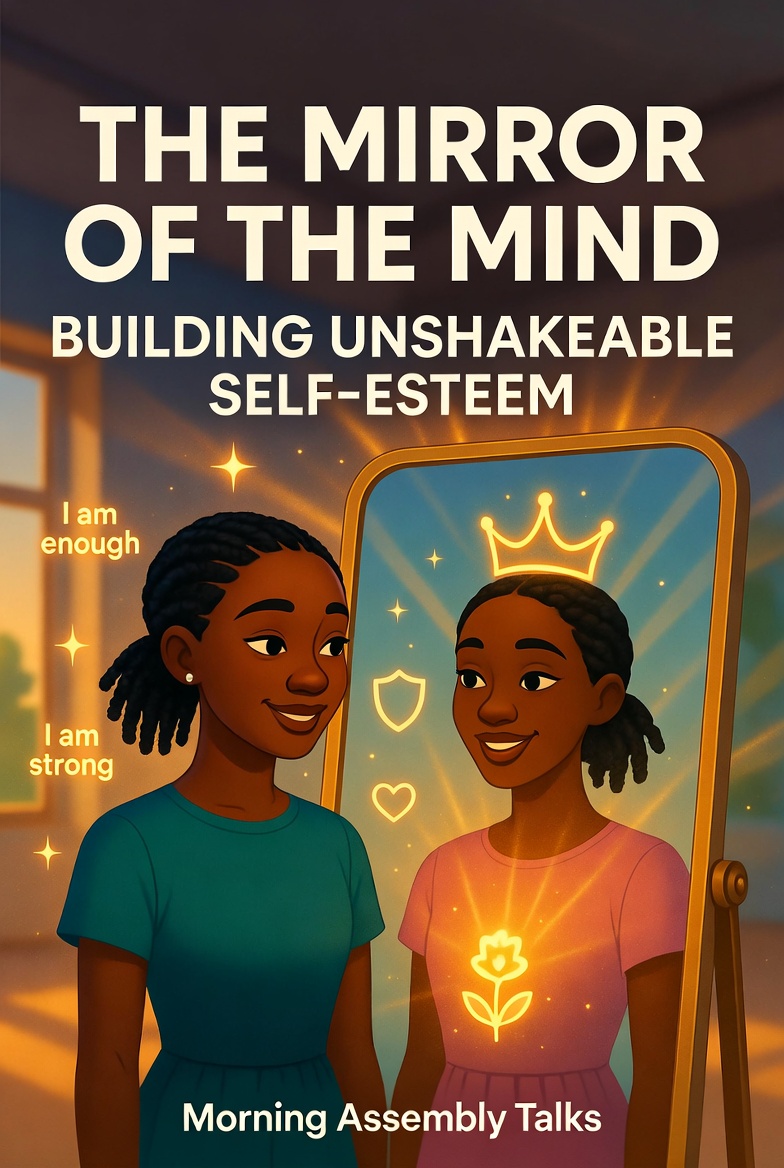
  • The Mirror of the Mind: Building Unshakeable Self-Esteem

    The Mirror of the Mind: Building Unshakeable Self-Esteem

    Good morning, great students.

    Imagine for a moment that you are carrying a backpack.
    Not an ordinary one—but a backpack filled with every word ever spoken about you… every grade you’ve received… every mistake you wish you could erase.

    For some of you, that backpack feels light.
    For others, it feels heavy—like it’s filled with stones, pulling your confidence down with every step.

    That weight… is your self-esteem.

    But listen carefully:
    Self-esteem is not about being louder, smarter, or more popular than others.
    It is the quiet, powerful voice within you that says:

    “I am enough—not because I am perfect, but because I am growing.”

    The Battle Within: Two Voices

    Inside your mind, there are two voices speaking every day.

    The Inner Critic whispers:

    “You’re not good enough. You failed again. Everyone is watching you.”
    But there is another voice—stronger, wiser, kinder.

    The Inner Ally says:

    “Yes, you struggled… but you are learning. And your worth has not changed.”

    The question is not which voice exists.
    The question is: Which one are you feeding?

    “You become what you believe about yourself.”

    When you give the Critic the microphone, your confidence shrinks.
    When you empower the Ally, your confidence grows.

    The Comparison Trap

    We live in a world of filters, highlights, and perfection on screens.

    You scroll… and suddenly:

    Someone looks better

    Someone seems smarter

    Someone appears more successful.

    But here is the truth:

    “Never compare your behind-the-scenes to someone else’s highlight reel.”
    What you see online is edited.
    What you feel inside is real.

    Theodore Roosevelt once said:
    “Comparison is the thief of joy.”

    When you compare, you don’t grow—you shrink.

    You are not in competition with anyone.
    You are in development with yourself.

    Grow Like a Tree

    Your self-esteem should be like a tree with deep roots.

    When others succeed, the tree does not shake with jealousy.
    It stands firm, grounded, and continues to grow at its own pace.

    “Be rooted in your worth, not in other people’s opinions.”
    Three Powerful Steps to Build Your Self-Esteem

    1. Guard Your Circle
      Surround yourself with people who lift you up—not those who tear you down.

    “Walk with the wise, and you become wise.”

    Choose radiators, not drains.

    1. Use the Power of “Yet”
      Stop saying:

    “I can’t do this.”

    Start saying:

    “I can’t do this… yet.”

    That one word—yet—opens the door to growth.

    “I am not there yet, but I am closer than I was yesterday.”

    1. Celebrate Small Wins
      Did you try today?
      Did you improve—even a little?
      Did you help someone?

    That is success.

    “Small progress is still progress.”

    Confidence is built in small victories repeated daily.

    The Truth About Your Worth

    Listen carefully:

    Your value is not in your grades alone but in your innate skills and talents.
    Your value is not in people’s opinions.
    Your value is not in your mistakes.

    Your value is built into you.

    Eleanor Roosevelt said:
    “No one can make you feel inferior without your consent.”

    Stop giving others permission to define you.

    The Closing: Your Unique Blueprint

    You were not created to copy someone else.
    You were created with a unique blueprint—a design that the world has never seen before.

    There is a level of greatness that only you can reach.

    “Be yourself; everyone else is already taken.”

    So today, walk with confidence.
    Speak to yourself with kindness.
    Carry your story with pride.

    And remember:

    “The most important voice you will ever hear… is your own.”

    Go out today and be unapologetically, confidently, and powerfully you, the only You, that you have.

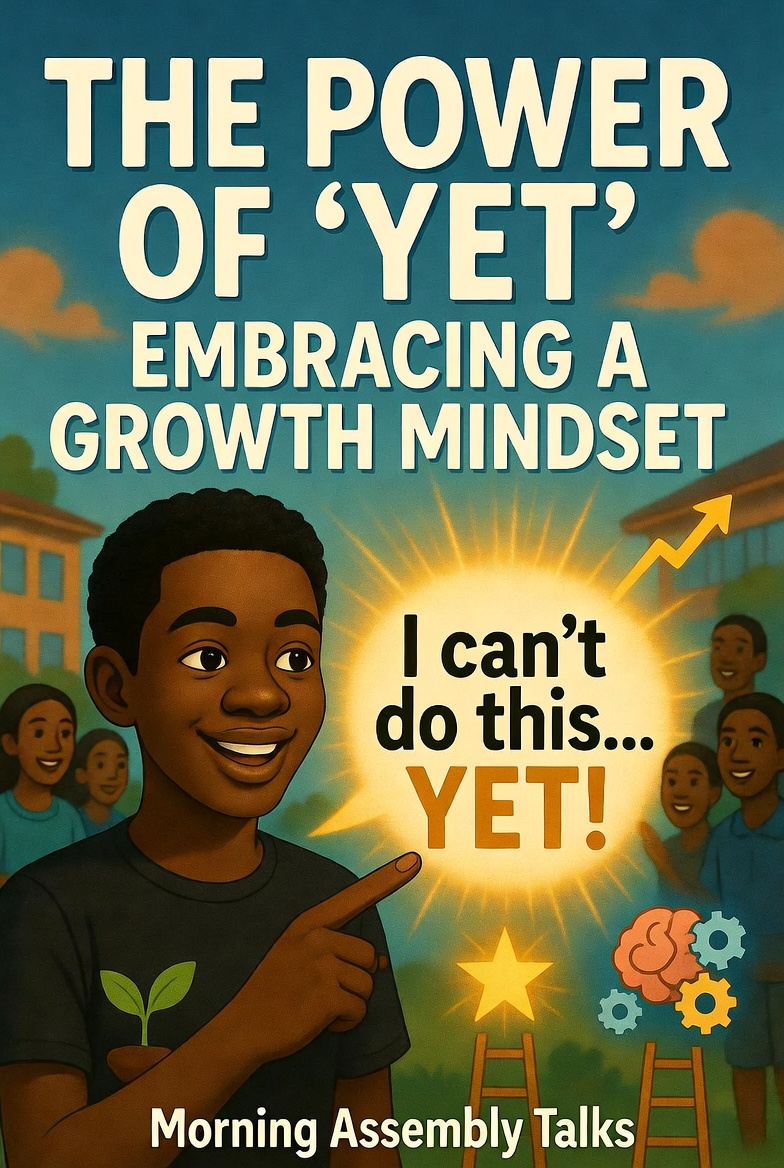
  • The Power of “Yet”: How to Break Through Your Mental Brick Walls

    The Power of “Yet”: How to Break Through Your Mental Brick Walls

    Have you ever sat at your desk, looked at a math problem, a coding challenge, or a difficult essay and felt like you hit a brick wall? Your brain says, “I can’t do this. I’m just not good at this.”

    That wall feels very real to every student. But today, I want to give you a three-letter sledgehammer to break that wall down. That word is YET.

    It is a word that shifts your thinking from giving up to giving more effort. It is a word that defines your Mindset.

    Understanding Your Internal Lens

    Your mindset is the hammer needed to break down the obstacles standing between you and your potential. It is the “internal lens” through which you see every challenge. Generally, there are two ways to view your own talent:

    • Fixed Mindset: Believing your intelligence and talents are “carved in stone.” You think you are born with a set amount of skill, and that’s it.
    • Growth Mindset: Believing your abilities can be developed through effort. You see your brain as a muscle that gets stronger the more you work it.

    The 4 Key Differences: Which One Are You Using?

    To understand which mindset you are currently operating in, look at how you handle these four areas:

    1. Challenges: A Fixed Mindset avoids challenges to stay safe; a Growth Mindset embraces them as a chance to “level up.”
    2. Obstacles: A Fixed Mindset gives up easily; a Growth Mindset persists and finds a new way around the problem.
    3. Effort: A Fixed Mindset sees effort as useless (“If I were smart, it would be easy”); a Growth Mindset sees effort as the pathway to mastery.
    4. Mistakes: A Fixed Mindset feels threatened by errors; a Growth Mindset sees mistakes as valuable feedback.

    The Story: The Lightbulb and the 1,000 “Failures”

    Think about Thomas Edison. He tried 1,000 times to create the lightbulb before he got it right. When asked how it felt to fail 1,000 times, he famously replied:

    “I didn’t fail 1,000 times. The lightbulb was an invention with 1,000 steps.”

    Edison understood the power of Yet. He wasn’t a failure; he just hadn’t succeeded yet.


    Words of Wisdom to Carry With You

    As you navigate your studies, keep these perspectives in mind:

    “Great things are not done by impulse, but by a series of small things brought together.” — Vincent van Gogh

    “The expert in anything was once a beginner.” — Helen Hayes


    The Call to Action: The “Yet” Challenge

    As you head to your next class or tackle your next project, I have a challenge for you:

    • Catch the “I Can’t”: The moment you hear yourself or a friend say “I can’t do this,” stop right there.
    • Add the Magic Word: Force yourself to say, “I can’t do this… YET.”
    • Ask for the Tool: Don’t sit in silence. Ask, “What is the next step I need to take so I can do this?”

    Remember, your path doesn’t have to look like anyone else’s to be spectacular. Some of the most successful people in Lagos—and the world—started exactly where you are: believing in the power of Yet.

    Go out there and grow your brilliance today.


    For more daily inspiration and learning resources, visit SkillsandCareerPaths.com.

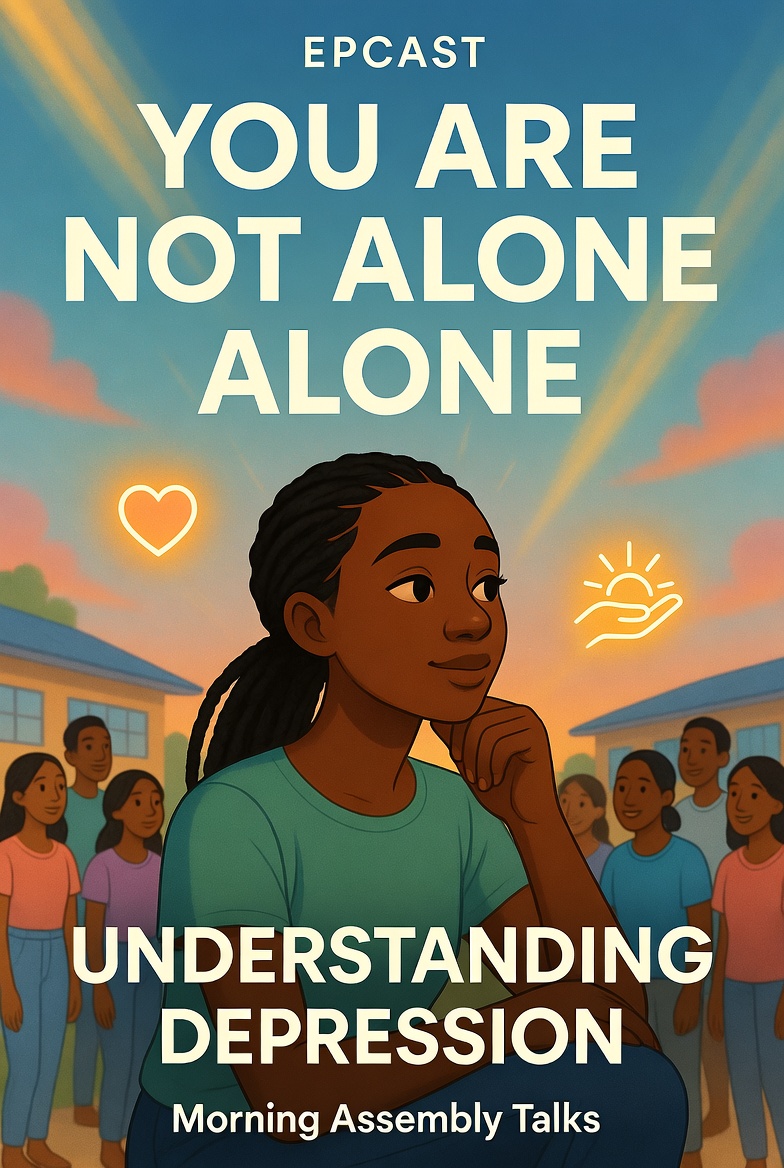
  • You Are Not Alone: Breaking the Silence on Student Depression

    You Are Not Alone: Breaking the Silence on Student Depression

    Let me ask you… have you ever felt like you were carrying the whole world on your shoulders? Like no one understands what you’re going through?

    If you have, you are not alone. And if you haven’t… remember, someone sitting next to you might feel that way today.

    The Invisible Weight

    Depression is heavy, and it is often invisible. But it is very real. Consider the story of Joyce, a student just like you:

    “I would wake up every morning feeling like I was carrying the whole world on my back. People called me lazy, but they didn’t see the nights I spent crying alone.”

    We all face pressures—exams, social media, friends, and family expectations. Amara, another student, shared a feeling many of us know all too well:

    “I felt I was falling behind my friends online, even though I was trying my best.”

    Defining Your Own Worth

    It is easy to get lost in the noise of the world, but remember this: Your journey is yours alone. Your worth is not measured by likes, grades, or comparisons.

    As the great Maya Angelou once said:

    “We may encounter many defeats, but we must not be defeated.”

    And Dr. Nneka Okoye reminds us:

    “Acknowledging your feelings is not weakness—it is the first act of courage in the battle against depression.”


    Taking the First Steps

    So, what can you do if you feel down… or if you see a friend struggling?

    • Speak Up: Talk to a trusted teacher, parent, or friend. Don’t stay silent.
    • Take Care of Yourself: Sleep, eat well, exercise, and do what makes your heart happy.
    • Be There for Others: Sometimes, listening to a friend is the most powerful thing you can do.

    Depression does not define you. You are strong. You are capable. And you are never alone. Tony found hope by speaking out:

    “Therapy, friends who listened, and small daily victories made me realize I am more than my sadness.”


    Our Shared Challenge

    Today, I challenge you all: Be aware. Be kind. Be brave.

    If you feel down, speak up. If a friend struggles, reach out. Let’s create a school environment where no one has to carry their burden alone.

    Repeat these words to yourself today:

    • Together, We are Stronger.
    • Together, We are Braver.
    • Together, We are Full of Hope.

    Thank you.


    For more support and mental health resources, visit SkillsandCareerPaths.com.

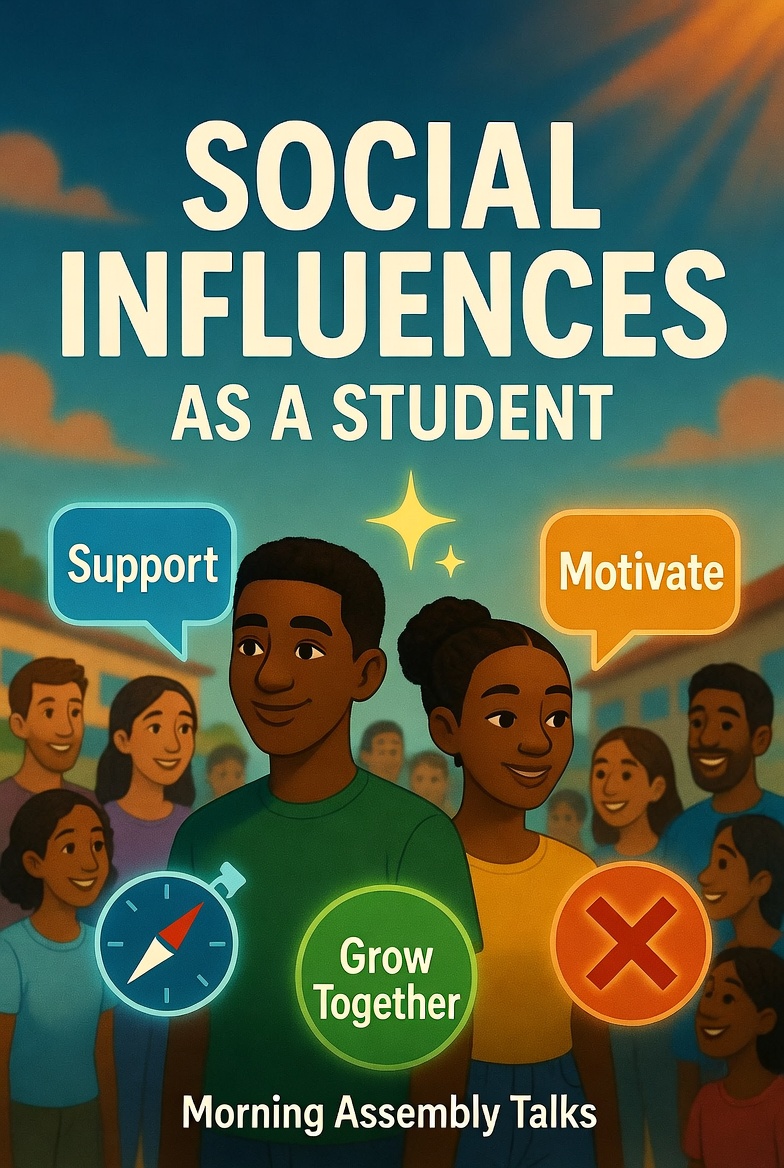
  • Your Circle, Your Future: The Power of Social Influence

    Your Circle, Your Future: The Power of Social Influence

    Social influences are the effects that people around you—friends, classmates, family, and even social media—have on your thoughts, behavior, and decisions.

    As a student, these influences do more than just affect your weekend plans; they shape how you see yourself, how you act, and even the career choices you make.

    Not All Influence is Created Equal

    It’s important to remember that social influence is a two-way street:

    • The Positive: Role models and motivated friends can inspire discipline, boost your confidence, and drive you toward success.
    • The Negative: Peer pressure or unhealthy comparisons can lead to poor decisions, loss of focus, and self-doubt.

    The key is to choose your circle wisely and stay true to your values. Learn to say “no” when necessary and keep your eyes on your personal goals.


    Words to Lead By

    “Show me your friends, and I’ll show you your future.”

    “Be strong enough to stand alone, wise enough to choose the right company.”


    🌍 Real-Life Examples of Positive Influence

    • Cristiano Ronaldo: Known for legendary discipline, Ronaldo often speaks about avoiding negative peer influences to stay focused on training. This mindset helped him become one of the greatest footballers in history.
    • Nelson Mandela: Mandela chose to surround himself with those who believed in justice and equality. Despite immense negative pressure, his commitment to positive influence changed a nation.
    • Burna Boy: The “African Giant” has shown how your environment and surrounding yourself with creative, positive influences can shape success on a global scale.

    🎓 Student Scenarios

    • The Power of Growth: Emeka started spending time with serious-minded classmates, and his academic performance improved almost immediately.
    • The Power of Change: Tunde followed friends who distracted him from his studies. However, the moment he noticed the negative impact, he had the courage to make a change and refocus on his goals.

    ✅ 6 Steps to Choosing Your Circle Wisely

    1. Identify your goals: Know what you want to achieve. Your circle should support, not distract, from these dreams.
    2. Observe behavior: How do these people make you feel? Are they encouraging and motivated, or do they bring negativity and stress?
    3. Look for shared values: Surround yourself with people who respect honesty, hard work, and personal growth.
    4. Limit negative influence: Intentionally reduce the time you spend with peers who pressure you into bad habits.
    5. Seek mentors: Find people whose achievements inspire you and who can guide you toward your own success.
    6. Be willing to stand alone: Sometimes, personal growth requires distance from old habits or friends who are holding you back.

    🚀 Call to Action: The Bold Decision

    Take a moment today to reflect on your circle. Are the people around you helping you grow or pulling you back?

    Make one bold decision today:

    • Choose one positive friend to learn from.
    • Reduce time spent with negative influences.
    • Follow people online who actually inspire your goals.

    Your environment shapes your future—start building the right one today.


    Find more guidance on building your path at SkillsandCareerPaths.com.

  • Mastering the Storm: A Student’s Guide to Understanding Emotions

    Mastering the Storm: A Student’s Guide to Understanding Emotions

    Being a student isn’t just about studying, passing exams, or choosing a career—it’s also about navigating your emotions. How you feel affects your focus, your decisions, your relationships, and your overall well-being.

    Learning to understand your emotions is the first step toward staying balanced, grounded, and confident.

    Emotions are Signals, Not Commands

    Emotions like stress, excitement, frustration, or fear are completely normal. The key is to recognize them, name them, and respond wisely instead of reacting impulsively.

    For example, feeling nervous before a test is natural. However, when you recognize that nervousness, you can channel that energy into preparation, which actually helps you perform better.


    Wisdom for the Journey

    “Your emotions are signals, not commands. Listen, understand, and act with purpose.”

    “The more you understand yourself, the stronger and calmer you become.”


    Real-Life Scenarios: Turning Feelings into Fuel

    Sade’s Story: From Overwhelmed to Organized

    Sade often felt buried under homework and upcoming exams. By journaling her feelings every day, she began to identify a pattern: her stress spiked 48 hours before any deadline.

    • The Solution: She started managing her time earlier, taking scheduled short breaks, and asking for help when she felt the “spike” coming. Her anxiety decreased, and her confidence soared.

    Michael’s Story: From Anger to Leadership

    Michael realized he was often quick to get angry during group projects when things didn’t go his way.

    • The Solution: He practiced the “Pause.” By pausing and thinking for five seconds before reacting, he improved his communication and became a much better teammate.

    Understanding your emotions doesn’t mean avoiding them—it means learning from them, controlling them, and using them to grow.


    🚀 Call to Action: The Emotional Check-In

    Today, take a moment to check in with yourself. Don’t just rush to the next task—stop and ask:

    1. What emotions am I feeling right now? (Is it worry? Excitement? Boredom?)
    2. What triggered them? (Was it a comment from a friend? A difficult assignment?)
    3. How can I respond in a positive way? Awareness is the first step to emotional strength. Start noticing your emotions today and take control of your day!

    For more daily inspiration and emotional wellness resources, visit SkillsandCareerPaths.com.