
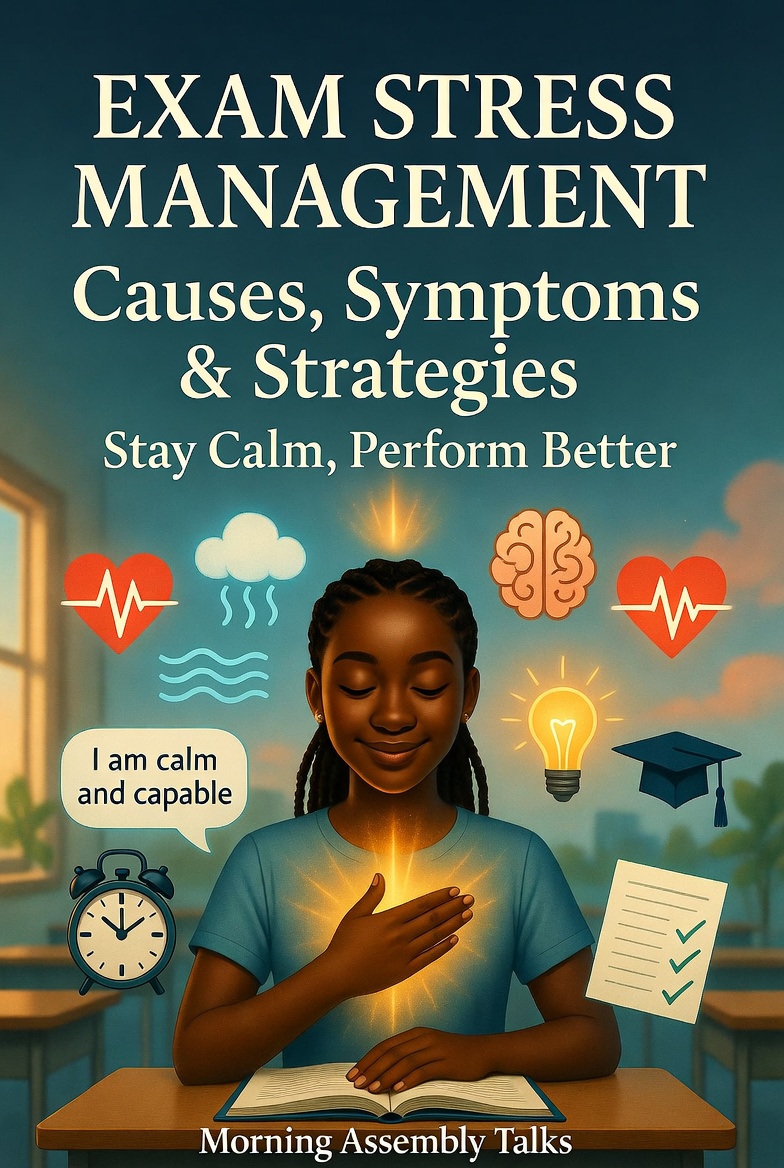
Exam season can feel like a high-pressure environment, but understanding how to handle that pressure is the secret to peak performance. Stress is a natural response—not all of it is bad. While mild stress can sharpen your focus, excessive stress can hinder your ability to think clearly.
🔍 Understanding the “Fire” of Stress
The Analogy: Stress is like fire. A controlled flame cooks food perfectly; an uncontrolled blaze burns the kitchen down.
| Causes | Symptoms |
|---|---|
| Fear of failing or missing expectations | Physical: Sweaty palms, racing heart, fatigue |
| Poor time management | Emotional: Irritability, panic, restlessness |
| Pressure from parents or peers | Cognitive: Difficulty concentrating, “blanking out” |
Export to Sheets
The Lesson: Stress can fuel your performance if managed; left unchecked, it destroys focus.
🌬️ 1. Deep Breathing & Relaxation
The Analogy: The mind is like a computer overheating under pressure. Deep breathing is the cooling fan that restores clarity.
- Symptoms It Helps: Racing heartbeat, shallow breathing, and sudden panic.
- The Strategy: Practice 4‑4‑6 breathing. Inhale for 4 counts, hold for 4, and exhale slowly for 6. Repeat this 5 times before the exam starts.
🗣️ 2. Positive Self-Talk
The Analogy: Negative thoughts are like carrying heavy stones in a backpack; positive thoughts are balloons lifting you up.
- Symptoms It Helps: Self-doubt, low confidence, and fear of failure.
- The Strategy: Replace “I can’t do this” with empowering affirmations:
- “I am calm, confident, and capable.”
- “I have prepared well; I will perform my best.”
👁️ 3. Visualization
The Analogy: The brain often cannot distinguish a real event from a vivid imagination. Rehearsing success prepares you to achieve it.
- Symptoms It Helps: Mental blanking and low confidence.
- The Strategy: Close your eyes and picture yourself sitting calmly in the hall, reading questions confidently, and answering them correctly.
⏳ 4. Time Management & Pacing
The Analogy: Exams are like a long road. Rushing leads to mistakes; pacing ensures a safe arrival.
- Symptoms It Helps: Feeling rushed or leaving questions unanswered.
- The Strategy: 1. Scan the entire paper first. 2. Allocate specific time per section. 3. Answer easy questions first to build momentum.
🔋 5. Physical Readiness
The Analogy: A phone with 5% battery won’t function well; your brain needs energy and hydration to process information.
- Symptoms It Helps: Fatigue, dizziness, and poor concentration.
- The Strategy: * Eat light, balanced meals (avoid heavy, oily foods before an exam).
- Stay hydrated with water.
- Stretch your muscles before entering the hall.
🧠 6. Cognitive Reframing
The Analogy: It’s not the stress itself, but our interpretation of it that causes panic.
- Symptoms It Helps: Overreacting and “catastrophic” thinking.
- The Strategy: Shift your perspective. Instead of saying, “This exam will ruin my life,” say, “This exam is a challenge that I am ready to tackle.”
🛑 7. Take Mini-Breaks
The Analogy: Even race cars need pit stops. Non-stop work burns out your mental engine.
- Symptoms It Helps: Fatigue and short attention span.
- The Strategy: During long study sessions, take a 2–5 minute break every 50–90 minutes. Stretch, look away from your books, and breathe.
📈 8. Focus on Process, Not Outcome
The Analogy: Focusing on results is like trying to control the weather. Control your actions, not the sky.
- Symptoms It Helps: Obsessing over grades and panic attacks.
- The Strategy: During the exam, don’t think about the final grade. Concentrate only on the question in front of you and your timing strategy.
💡 Closing Motivation: Ada’s Success
Ada was extremely anxious before her WAEC exams. She felt her heart racing and feared she would forget everything. By using deep breathing to calm her heart and pacing to manage her time, she stayed steady. She completed every paper successfully and realized that while stress is normal, panic is optional.
“A calm mind brings inner strength and self-confidence, so that’s very important for good health.” — Dalai Lama
The Final Lesson: Awareness + Strategies + Practice = Controlled performance and better results.
For more career and study tips, visit skillsandcareerpaths.com