
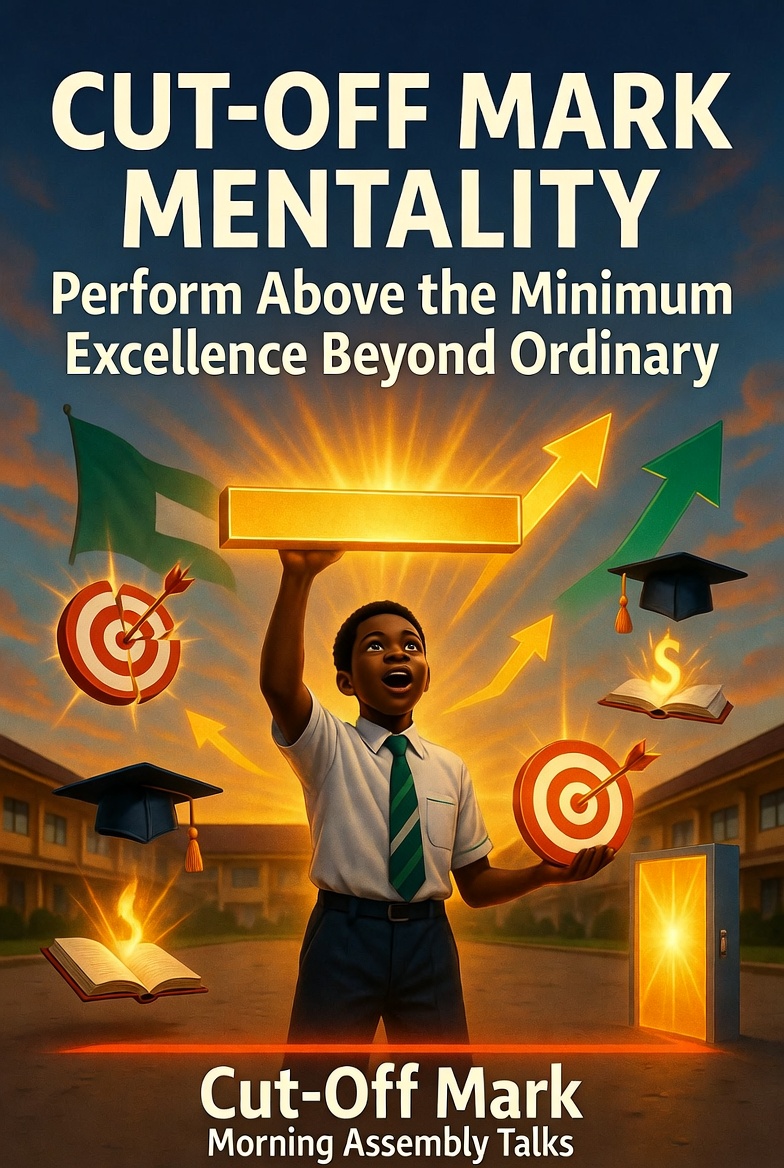
Many students approach exams like WAEC, JAMB, or school assessments with a single thought: “I just need the minimum to pass.” This is the Cut-Off Mark Mentality. While it feels safe, it is a subtle trap that limits your potential and shrinks your future opportunities.
The Analogy: Crossing a river by stepping only on the very first stone might keep your feet dry for a moment, but it won’t get you to the other side with speed or confidence. Students who aim higher leap across multiple stones, moving with mastery and readiness.
🧠 The Psychology of Minimum Effort
Why do we settle for “just enough”? Understanding the root of this mindset is the first step to breaking free from it.
- The Comfort Zone Trap: Minimum effort feels safe because it doesn’t require extra energy, but it stunts your growth.
- Fear of Failure: Some students avoid ambitious goals because the “higher you climb, the further you fall.”
- Short-Term Thinking: Focusing only on the next Friday, rather than the next four years.
The Lesson: True growth happens outside the minimum. Passing is important, but exceeding expectations builds the confidence and mastery required for the real world.
📈 Why Performing Above the Minimum Matters
Aiming for the top isn’t just about the grade; it’s about the doors that open when you arrive.
| Benefit | Impact |
|---|---|
| Opportunities | High scores unlock top-tier universities, competitive courses, and scholarships. |
| Confidence | Deep mastery of a subject reduces the “exam fever” associated with future tests. |
| Foundation | Excelling now makes advanced learning in University much easier. |
Export to Sheets
A Tale of Two Students: Chukwuemeka aimed only to meet the JAMB cut-off. He got in, but he struggled in his first year because his foundation was weak. His friend, who consistently aimed for 80% during prep, transitioned into university life with confidence and zero stress.
✨ Strategies to Break the “Minimum” Habit
🎯 1. Set Ambitious Targets
Don’t aim for 50% if the cut-off is 45%. Target 70% or 80%.
- Visualize: See yourself achieving that high score and imagine the phone calls you’ll make to share the good news.
📚 2. Focus on Mastery, Not Memorization
The Analogy: Knowledge is a ladder. Minimum effort keeps you on the first rung. Mastery moves you to the top where the view (and the opportunity) is better.
- Master the concepts behind the questions. Avoid shortcuts that only give temporary results.
📝 3. Use Past Questions Strategically
Don’t just use past questions to “see what might come out.” Use them to:
- Identify high-frequency topics.
- Time yourself to see if you can beat your previous “personal best” score.
📊 4. Track Your Progress
Keep a score log for your assignments and practice tests.
- Celebrate Growth: Moving from 50% to 60% to 70% is evidence of a mindset shifting toward excellence.
🔄 The Mindset Shift
To change your results, you must first change your internal dialogue.
- From: “I just need to pass.”
- To: “I will exceed expectations and prepare fully for what comes next.”
The Analogy: Think of exams as an audition. Passing barely gets you noticed; performing above expectations makes you the star of the show.
💡 Closing Motivation
Ada once aimed just to meet the WAEC cut-off. After shifting her mindset to aim higher, she not only topped her class but earned multiple scholarship offers, entering her dream university with her head held high.
“Don’t settle for the bare minimum. The world rewards those who go beyond what is expected.” — Unknown
Key Takeaway: Minimum effort produces minimum results. Aim above the cut-off—your confidence, knowledge, and future opportunities depend on it.
Stay tuned for more excellence strategies at skillsandcareerpaths.com