
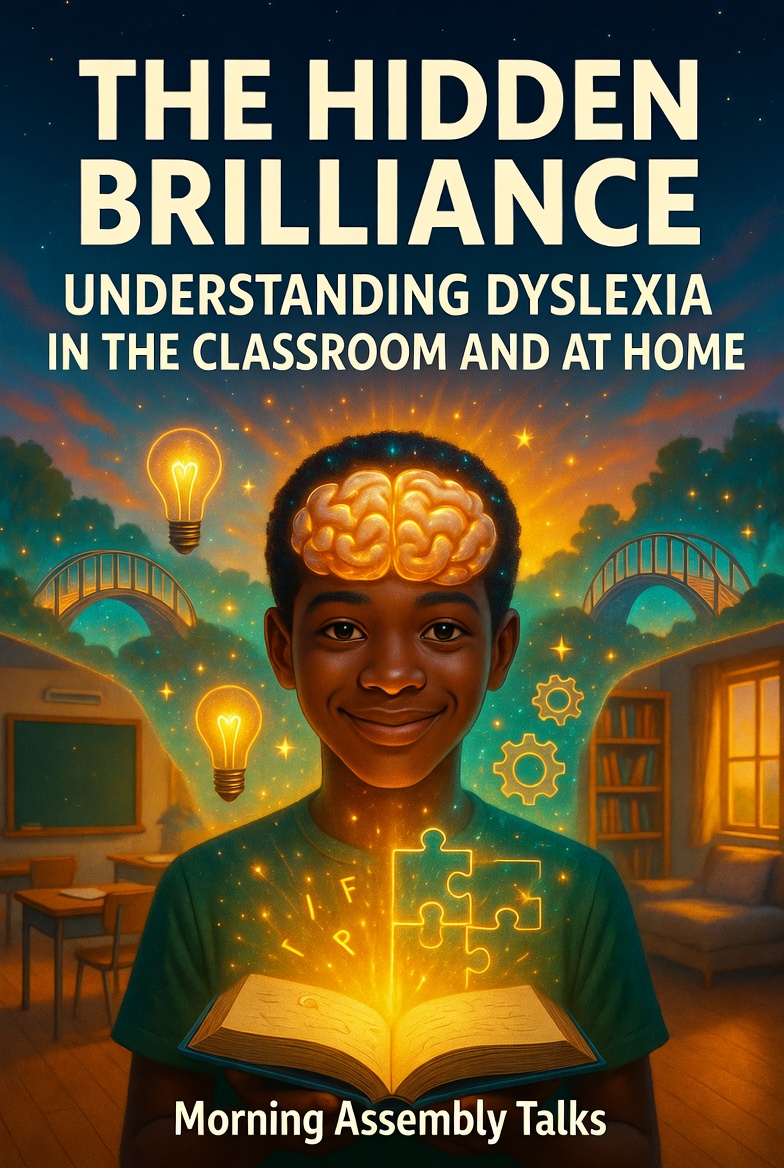
“He’s so bright, so why can’t he just read the instructions?” “She can build a complex Lego set in minutes, but she can’t spell ‘friend’.”
For many parents and teachers, these contradictions are the first signs of Dyslexia. For a long time, children who struggled to decode words were labeled “slow” or “unmotivated.” We now know the truth is much more exciting: Dyslexia is not a lack of intelligence, but a diversity of wiring.
What is Dyslexia, Really?
Dyslexia is a specific neurological difference that makes it difficult for the brain to connect the sounds of speech to the letters on a page.
While a “typical” reader’s brain processes language in a linear, streamlined way, a dyslexic brain often takes the “scenic route,” engaging areas responsible for spatial awareness and creative synthesis.
🚩 Common Signs for Parents and Teachers
Early identification is the key to protecting a child’s self-esteem. Look for these three primary indicators:
- The “Spelling Wall”: A child may master a word on Monday but seem to have never seen it by Tuesday.
- The “Mirror” Effect: Frequently reversing letters like b and d or p and q beyond the age of seven.
- Reading Fatigue: Becoming physically exhausted or frustrated after just a few minutes of reading aloud.
The Ferrari Metaphor: Dyslexia is like a Ferrari engine with bicycle brakes. The power is there; we just need to upgrade the braking system to handle the speed of the mind.
The Power of the “Dyslexic Advantage”
When we stop focusing solely on what a student can’t do, we begin to see what they can do better than anyone else. Many of the world’s most successful entrepreneurs, artists, and engineers share this “neurological signature.”
- Spatial Brilliance: A student might struggle with a history textbook but can visualize a 3D model of a castle perfectly in their mind.
- Creative Problem Solving: A child may fail a spelling bee but be the first to find a creative solution to a complex social conflict.
Global Icons: Figures like Albert Einstein, Richard Branson, and Steven Spielberg didn’t succeed despite their dyslexia—they succeeded because their brains were wired to see the world differently.
How Skills and Career Paths Bridges the Gap
At skillsandcareerpaths.com, we don’t just “tutor” students; we empower them. We offer a specialized Support Therapy Program designed to turn struggle into strength through:
- Multisensory Mastery: Using techniques that involve seeing, hearing, and touching simultaneously to anchor language.
- Assistive Tech Training: Teaching students to use speech-to-text and AI tools so their ideas aren’t trapped by their handwriting.
- Executive Function Coaching: Helping learners organize thoughts and time.
- Teacher & Parent Advocacy: Providing the resources schools need to support students without crushing their spirit.
A Final Word to the Mentors
To the parents and teachers: You are the gatekeepers of a child’s self-esteem.
“The greatest burden of dyslexia isn’t the difficulty with reading; it’s the weight of being misunderstood by those who are supposed to guide you.”
If we change the way we teach, we change the way they learn. Redefine the path today.
[Explore Our Curriculum at Skillsandcareerpaths.com]